

Magnesium Benefits: 6 Reasons You Need It | Matakana Pharmacy
Posted by MATAKANA PHARMACY

By Mina Geris, BPharm (Otago) with Distinction, BBiomedSci (Otago), Integrative Natural Health Practitioner at Matakana Pharmacy & PracPharm
Magnesium is used by trillions of cells in your body to carry out hundreds of different processes every day. It plays an essential role in how your body metabolises food, produces hormones and handles stress, and it is highly important for muscle relaxation and recovery, bone health and sleep. In short, magnesium is a vital nutrient, and because your body uses it constantly it does not take long to run the supply down.
The trouble is that the shelves are full of options, and they are not all the same. Here are our top six reasons you may need plenty of this hard-working mineral, and how to choose a form that actually suits you.
Reason 1: Almost a third of Kiwis are not meeting their daily magnesium needs

The recommended dietary intake of magnesium ranges from about 310mg a day for women to 420mg a day for men. You will find it in cooked green vegetables, nuts, and a good raw cacao smoothie. Sounds easy, but around a third of us are not eating this on a daily basis, and many have higher needs thanks to lack of sleep or high stress. Refined and processed foods, which are low in magnesium, have crept onto more plates. The double whammy is that even with a balanced diet, modern farming has depleted our soils of many key minerals, leaving almost one in three Kiwis low in essentials like selenium and magnesium. It is worth topping up. You can browse our full magnesium range to see the options.
Reason 2: You lose and use a lot of magnesium every day

Coffee and tea are rich in tannins, which can reduce your gut's ability to absorb magnesium. Alcohol and caffeine both have a diuretic effect and make you pass more water, which increases the loss of water and minerals, magnesium included. Some medications, such as antibiotics, steroids and diuretics, can cause mild to significant magnesium loss. Heavy exercise also pushes magnesium out through sweat, which can make muscle recovery take longer, especially if you are already on the low side.
Reason 3: Stress

Magnesium has a special relationship with stress. When you are tense or stressed, you use up magnesium as part of your body's stress response, and low magnesium can also make you more prone to feeling stressed in the first place. It becomes a cycle: low magnesium adds to stress, stress uses and excretes more magnesium, and levels drop further. The good news is that topping up your magnesium can be a helpful way to support your body while you manage stress.
Reason 4: Sleep and fatigue

This is one of the most common reasons people ask their pharmacist or doctor about magnesium. Poor sleep quality, whether that is trouble getting to sleep, staying asleep or shallow sleep, along with daytime fatigue, can be linked to low magnesium levels. Of the hundreds of reactions magnesium is involved in, it helps make GABA, a calming, sleep-promoting neurotransmitter, as well as melatonin, the sleep hormone. If your magnesium is low, GABA and melatonin can sit below par, which may affect your sleep and leave you more prone to fatigue.
Reason 5: Easing aches, cramps and spasms
In one study, pregnant women given 300mg of magnesium a day reported noticeably fewer and less intense leg cramps after just four weeks. Magnesium also acts on NMDA receptors in the body, which are involved in pain sensitivity, and low magnesium is associated with higher levels of inflammation.
Reason 6: Heart health
Magnesium plays a role in normal heart and muscle function, and there is research suggesting it may help support healthy cholesterol and blood pressure. If you are managing your cholesterol or blood pressure, treat magnesium as a supportive extra rather than a treatment, and talk it through with your pharmacist or GP.
A note on health conditions: magnesium supports everyday wellbeing and is not a treatment for high blood pressure, heart disease or any medical condition. If you are managing a health condition or taking regular medication, check with your pharmacist or GP before starting a supplement, as magnesium can interact with some medicines.
The benefits of magnesium are not limited to the six above. It can help support so many areas of your health, from muscle tension, fatigue and poor sleep through to stress and female hormone balance. The reason you are reaching for magnesium will influence which form is best for you. Many magnesium supplements also contain co-factors, extra ingredients that help the magnesium do its job better, so the best supplement for you will have a comprehensive, synergistic formula that matches your needs. Below we cover our favourite options and explain how different forms of magnesium are absorbed differently.
Different forms of magnesium and how they affect absorption
Not all forms of magnesium are equal. Different forms are absorbed to different extents and have different properties and benefits. Broadly speaking, some are poorly absorbed, some are moderately absorbed, and some are very well absorbed.
Magnesium oxide and magnesium citrate
- These forms are poorly absorbed.
- That means they are not the best choice for replenishing your magnesium stores.
- The part that is not absorbed draws water into the bowel, which can have a laxative effect.
- For this reason they are mainly recommended to help with a sluggish bowel or occasional constipation, rather than for topping up magnesium.
Well-absorbed magnesium: our pick
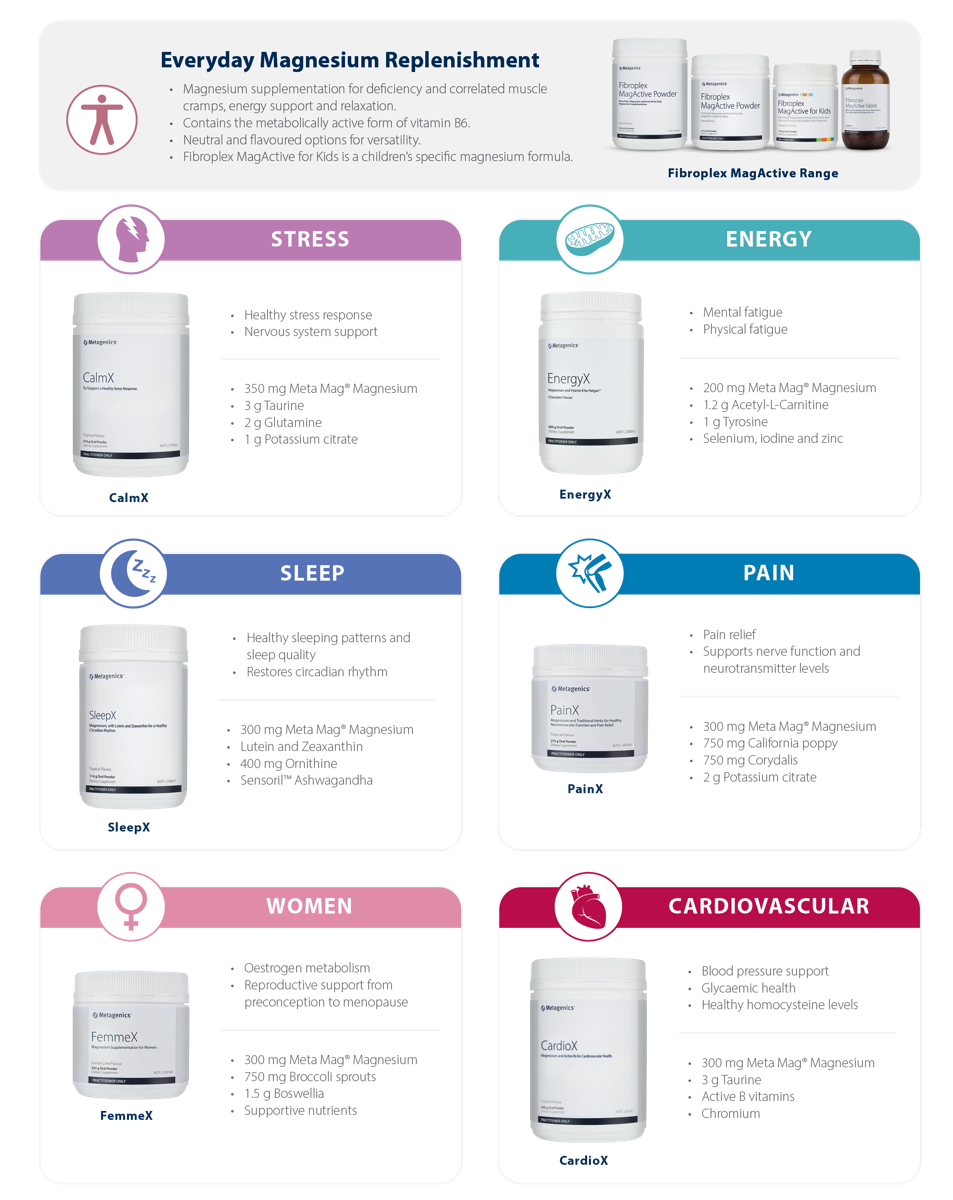
If your goal is to top up your magnesium levels, a well-absorbed form is what you want. Metagenics MagActive (previously Fibroplex MagActive) is the one we most often reach for. It is designed to help prevent symptoms associated with magnesium deficiency and to support healthy muscle function, with good absorption. It comes as a raspberry or neutral powder as well as a tablet, and there is even a MagActive for Kids.
The full range
To find the magnesium that suits you best, browse the full Metagenics range, or get in touch and the pharmacy team can help you choose. Some products are practitioner-only, so check whether you are eligible or simply ask us.
Not sure which magnesium is right for you? Have a browse of our magnesium range or have a chat with the pharmacy team, and we can help match one to what you need.
Frequently asked questions
What does magnesium actually do?
Magnesium is involved in hundreds of processes in the body every day, including energy production, hormone balance, the stress response, muscle relaxation and recovery, bone health and sleep. Because your body uses it constantly, levels can run down over time.
What can cause low magnesium?
Everyday things add up: a diet low in green vegetables, nuts and wholefoods, plenty of coffee, tea or alcohol, high stress, heavy exercise, some medications, and magnesium-depleted soils that lower the amount in our food. Around one in three New Zealanders falls short of the recommended daily intake.
Which form of magnesium is best absorbed?
It depends what you want it for. Magnesium oxide and citrate are poorly absorbed and mostly used for occasional constipation. For topping up your magnesium levels, a well-absorbed form such as the one in Metagenics MagActive is a better choice.
Can magnesium help with sleep?
It may. Magnesium is used to make GABA, a calming neurotransmitter, and melatonin, the sleep hormone, so low levels can affect sleep quality. Many people take a well-absorbed magnesium in the evening. It works best alongside good sleep habits, and it is not a substitute for medical advice if sleep problems persist.
How much magnesium do I need each day?
The recommended dietary intake is around 310mg a day for women and 420mg a day for men. Needs can be higher with stress, poor sleep or heavy exercise. You can get magnesium from cooked green vegetables, nuts and seeds, with a supplement to top up any gap.
Is magnesium safe to take with my medication?
Magnesium can interact with some medicines and is not suitable for everyone, so if you take regular medication or have a health condition, check with your pharmacist or GP first. The pharmacy team is happy to help you choose.
About the author
Mina Geris is a New Zealand qualified pharmacist and integrative natural health practitioner with over a decade's experience across community and corporate pharmacy, and a special interest in functional medicine and integrative practice. Mina holds a BPharm (Otago) with Distinction and a BBiomedSci (Otago) in Functional Human Physiology, and is one of the senior practitioners at PracPharm.
This article is general information and not a substitute for personalised medical advice. If you have a health condition or take regular medication, please speak with your pharmacist or GP before starting a new supplement.


